

1 million Australians with undiagnosed thyroid disorders remain at risk of irreparable damage
The Australian Thyroid Foundation is a national not-for-profit organisation with charity status aimed at patients and the healthcare community. The ATF’s focus is to support and educate its member base and promote our Good Thyroid Health Messaging throughout the Australian Community.
Australian Thyroid Foundation, CEO Beverley Garside attending the breakfast gave her response to the Federal Budget and the Foundation’s pre-budget submission, which was not granted.

Health Minister appoints Chair to National One Stop Shop Program
The Australian Government has appointed Emeritus Professor Ian Chubb AC, FAA FTSE to lead key reforms as Chair of the Inter-Governmental Policy Reform Group (IGPRG) for health and medical research, including clinical trials.
Minister for Health and Aged Care, The Hon Mark Butler MP on the selection and appointment said, “Professor Chubb has dedicated his career to improving health and medical research and education in this county and I am pleased he has agreed to share his knowledge and experience through the IGPRG.
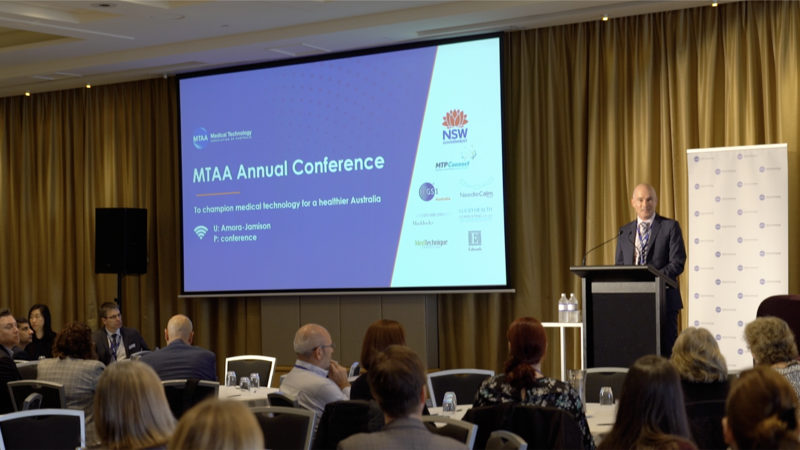
MTAA MedTech19 Annual Conference
MTAA’s annual conference is the premier medical technology industry conference in Australia and brings together leaders and influencers across industry, government and academia to discuss what’s up ahead for the MedTech industry.

Intervention in hearing loss for patients
In her role as an audiologist and trainer, Lauren McNee emphasises the urgency of addressing sudden hearing loss, highlighting the time-sensitive nature of available treatment options. She advises healthcare professionals, including GPs, pharmacists, primary care nurses and specialists, to remain vigilant for subtle signs of hearing loss in their patients. Such signs may include difficulty following prescription guidelines, miscommunication during conversations, or non-verbal cues like a tilt of the head or asking for repetitions.

Lens on patient care & allied health workforce across settings
The CEO of Allied Health Professions Australia (AHPA), Bronwyn Morris-Donovan spoke with Australian Health Journal about the following:
The structure and priorities for AHPA
The setting and disciplines in Allied Health
Allied Health representation in the Strengthening Medicare Task Force
Importance of a data strategy and interoperability in delivery of allied health services
Key allied health priorities hopefully addressed in Federal Budget.
In the lead up to the Australian Federal Budget in May 2023, Australian Health Journal reached out to peak health industry bodies to hear about their priorities, either noted in pre-budget submissions lodged with Federal Government in January 2023 or in recent forums such as the Strengthening Medicare Taskforce.

Developing the nation’s first Health and Medical Research Strategy
Professor Steve Wesselingh serves as the CEO of NHMRC, having initially trained as an infectious diseases doctor. His career includes prominent roles such as Head of the Infectious Diseases Unit at the Alfred Hospital, Director of the Burnett, Dean of Medicine at Monash University, and the inaugural Director of SAHMRI. Under his leadership, NHMRC plays a critical role in funding health and medical research, allocating approximately a billion dollars annually to investigator-led projects, clinical trials, and various strategic initiatives. NHMRC also collaborates internationally with organisations such as the MRC and the EU, and manages grant allocation for the MRFF, which distributes $650 million each year.