
Medical Devices

Circular use of medical device technology and evolving policy and regulatory frameworks

Healthcare sustainability is increasingly becoming a strategic priority, extending beyond environmental goals to influence procurement, regulation, costs and supply-chain resilience. Against this backdrop, medical device reprocessing is emerging as a potential pathway towards a more circular healthcare system.

Challenge advances health technologies and medical devices in the MedTech sector

In July IDE Group launched the 2027 Building Better Futures for Health (BBFH) Challenge, a program supporting early-stage MedTech innovators move from concept to commercialisation. Delivered with Medical Technology Association of Australia’s (MTAA) MedTech Compass, the 2027 program marks 10 years of impact.

Now in its 11th year, BBFH supports researchers, clinicians, entrepreneurs and early-stage ventures tackling urgent healthcare needs. Selected teams will pitch to industry experts, gaining feedback to strengthen commercial potential.

Bringing the circular healthcare economy to life

Neroli Manning is the Managing Director for Cardinal Health Australia & New Zealand (ANZ). With over 30 years of experience in the healthcare industry, Neroli is a transformative leader known for her people-first, customer-centric leadership style.

Surgeon-scientist path laid for medical device research

In 2022, Distinguished Professor Gordon Wallace AO and Professor Mukherjee jointly established Beyond Science as a clinician led, academically supported and clinician run Australian-first medical technology translation program.

The program is aimed at early career researchers and clinician-scientists working in medical device research specifically in otolaryngology (ear, nose, and throat), head and neck surgery.

CASE STUDY: Evolution in the medical device supply chain

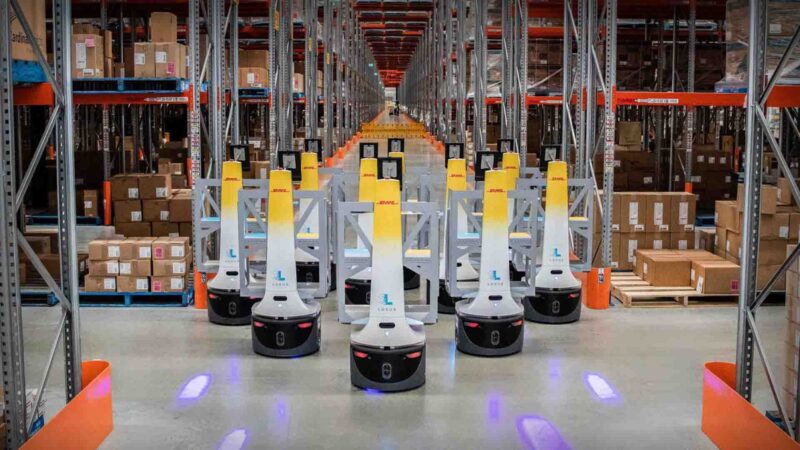
For Cardinal Health, a global manufacturer and distributor of medical products, the process begins when products arrive in Australia and are cleared by customs before being stored at their Sydney warehouse. From here, they fulfil orders for various clients, including hospitals and wholesalers, supported by DHL’s logistics services.

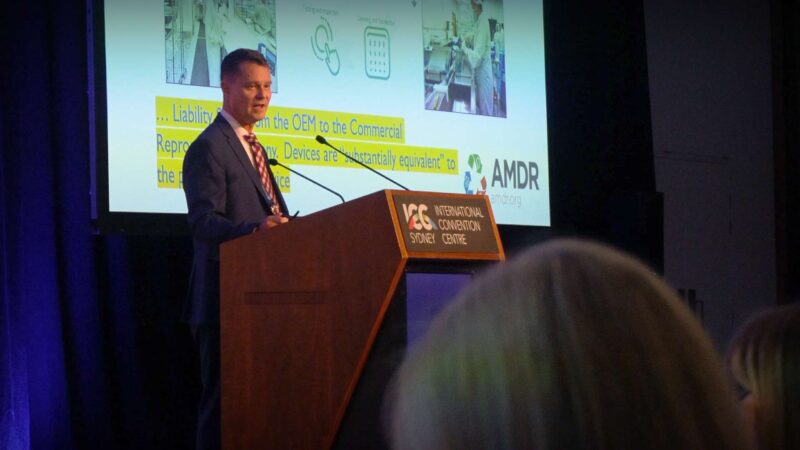
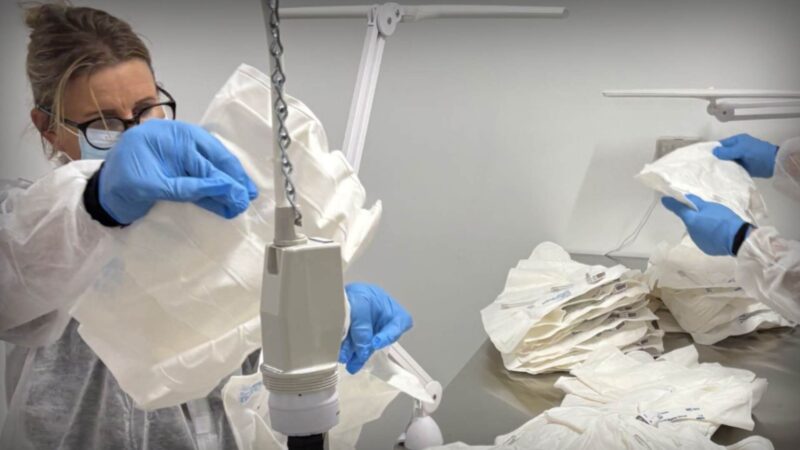
Cardinal Health brings device reprocessing plant to Australia

Cardinal Health is global medical products manufacturer and leading provider of single-use device reprocessing services in the U.S. In Australia and New Zealand, as one of the largest suppliers of medical devices, announced on 23 May 2024 that it will be opening a single-use medical device reprocessing facility in Australia – its first reprocessing facility outside the United States.

On 18 March 2025 at the Health Innovation Living Lab at the John Hunter Hospital, a further announcement was made, on the chosen single-use medical device remanufacturing facility in Beresfield, Newcastle, set to commence operation late 2025, supported by the NSW Department of Primary Industries and Regional Development.

Bionic eye trial shows improvements in functional vision for retinitis pigmentosa

Results of the first clinical trial of Australia’s ‘second generation’ bionic eye have demonstrated ‘substantial improvement’ in four participants’ functional vision, daily activities and quality of life over a period of more than two and a half years.

Led by the Centre for Eye Research Australia, Bionics Institute, University of Melbourne and Royal Victorian Eye and Ear Hospital, the trial findings add to interim results which showed that the second-generation bionic eye developed by Australian company Bionic Vision Technologies provided rapid improvements for four patients with blindness caused the genetic eye condition retinitis pigmentosa.

Lasers in dental treatment without needles and drills

In 2017, Dr. Omar Zuaiter and Alaa Habeb launched Dentroid, a dental technology startup with a mission to make dentistry a kinder and friendlier experience for patients and dentists using photonics (using laser technology) and robotics, as alternatives to needles, drills and sprays. The vision for the startup is to have dentistry adopt laser technology, addressing the root causes of dental pain & anxiety, and create a pain-free dental experience.

Ensuring stringent quality standards in the lifecycle of medical devices

Dr Jasjit Baveja is the Associate Director of Policy at the Medical Technology Association of Australia (MTAA), where she oversees regulatory affairs, clinical code of practice, procurement, industry policy, reimbursement, and advocacy. With over 20 years of experience in the medical device regulatory space, Dr Bavej’s expertise lies in providing educational opportunities for regulatory professionals in Australia to ensure continuous learning and professional development. She collaborates closely with the Therapeutic Goods Administration (TGA) to run workshops that provide invaluable experience, networking opportunities, and skill enhancement.

Gavin Fox-Smith talks Medical Technology

Former Johnson & Johnson ANZ Managing Director, Gavin Fox-Smith on working in large & small MedTech companies

Scroll to top