

Allied Health Leader shares career insights
Mirella Vagnarelli is a distinguished healthcare leader with proven expertise across South Australia and the United Kingdom, where she has successfully led large, multidisciplinary teams. Holding a Master of Business Administration (Health) from Flinders University, she earned Fellowship status with the Australasian College of Health Service Management in 2022. In 2023, Mirella was honoured as a scholarship recipient for the prestigious ‘Women in Leadership’ Program at the Monash Centre for Health Research and Implementation.

Success in WA pilot to observe babies showing delays in social interaction & communication development
Inklings – led by The Kids Research Institute Australia – is a program for babies aged 6-18 months whose communications skills are developing differently to expected milestones. In early 2025 it has completed the first year of a pilot program.
At the time of filming (Nov 2024), Inklings has received more then 300 enquiries across WA and started to deliver services to 160 children, with almost 60 who have completed the program.

Dental marketing insights from leading authority
Winning the Australian Dental Industry Award for Marketing has had a big impact to Dental Marketing Solutions. As Angus comments in closing, “Receiving the award is social proof to say, well, these guys must know something, because an independent body of their peers has assessed them and said”. He added, “Certainly it’s been good in terms of building our business.”

Evolution of the pharmacy tribe
The past 18 months has shown the strength of Australian pharmacies in ensuring accessibility, credibility and maintaining rapport with the community to administer COVID-19 vaccinations, handle electronic prescriptions and looking to play an integrated role in aged care.

Upskilling & empowering Health Professionals to support preconception to pre-school level health
A new podcast series, developed by Health and Wellbeing Queensland, is designed to upskill and empower health professionals in their support of parents from preconception through to the pre-school years.
Clinician’s Guide to the First 2000 Days follows the success of Health and Wellbeing Queensland’s first podcast series Clinician’s Guide to Healthy Kids, launched in 2023. Both focus on supporting health professionals to have effective conversations on positive health behaviours.
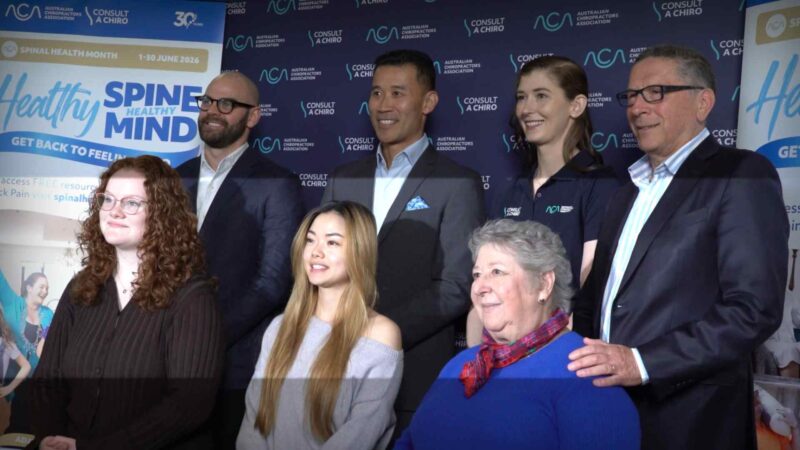
Chiropractors commence Spinal Health Month with research in mental health
A new Australian-first clinical research study has found promising results for reducing the mental health impacts of chronic musculoskeletal pain by combining online psychological therapies with routine physical care. The research, funded by the Australian Chiropractors Association (ACA) and conducted through CQUniversity and Macquarie University’s MindSpot programme, highlights the strong connection between chronic pain and mental wellbeing.