
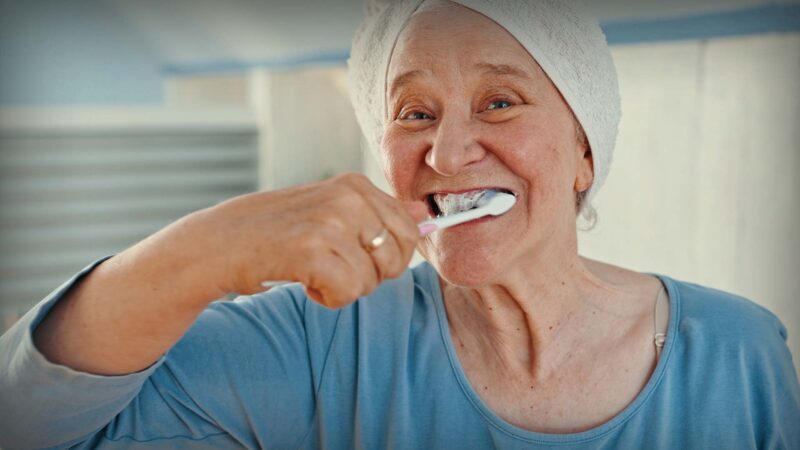
Getting the conversation going on the connection between oral health and chronic conditions
Dr. Carol Tran is an Oral Health Therapist and co-founder of Oral Health Home, an organisation focused on innovative, prevention-oriented oral health education and outreach. She is a Past President of Dental Hygienists Association of Australia (DHAA) and currently is the Scientific Program Chair, for upcoming congress in October 2025, for the newly formed Oral Health Association of Australia (OHAA).

Inaugural report into Australasian Paramedicine Workforce Survey report to aid workforce planning
In a milestone for paramedicine, the Australasian College of Paramedicine earlier this year released the first report of a landmark three-year study identifying and exploring trends that affect the Australasian paramedicine workforce.
The inaugural Australasian Paramedicine Workforce Survey report 2023-24 explores the demographic, career trajectory, work motivations and conditions for those working in clinical, management and educational capacities within the paramedicine workforce of Australia and Aotearoa New Zealand.

Job-ready clinical trial interns
The Victorian Comprehensive Cancer Centre Alliance, or VCCC Alliance for short, is a Victorian partnership of 10 research, academic and clinical institutions looking at improving cancer outcomes for patients.
The VCCC Alliance SKILLED clinical trial internships program is a pathway for scientists to build role-specific clinical trial knowledge, experience and in a clinical trials unit through theoretical and on-the-job training. The internship program is a 40 week intensive program to get science student interns job ready for clinical trial assistant and study coordinator internship roles.
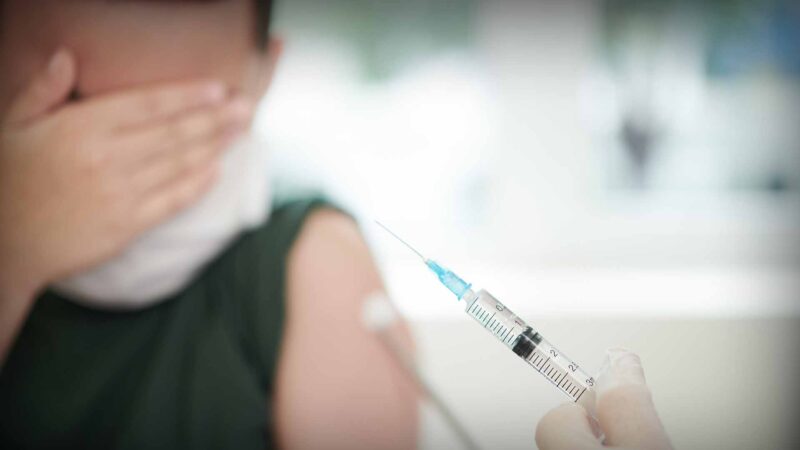
Clinical entrepreneur addresses needle-phobia
Australian entrepreneur, Lauren Barber, turned her nursing background into the role of an inventor and launched a medical device into the Australian healthcare industry.
No journey is linear for an entrepreneur, but Lauren has travelled considerable distance from a nursing student to a successful entrepreneur illustration her determination and passion to help those with needle phobias. Lauren’s work with NeedleCalm is making a positive impact in the healthcare industry and improving the experiences of patients and clinicians alike.

Orthopaedic surgeon driven to understand & manage infection
In tandem with his clinical practice, Associate Professor Tetsworth is deeply engaged in orthopaedic research, with a keen interest in infection management, infection control, limb salvage, bone defect reconstruction, biomarker development for infection, bone growth hormone delivery, and the use of 3D printed models for reconstructing segmental bone defects.
ARCS Australia

ARCS Australia Ltd is a national, membership-based organisation focused on the development and growth of the healthcare sector. ARCS provides education, career pathways, professional development and advocacy to the healthcare sector.
Our membership is made up of individuals working in regulatory affairs, clinical research, health economics, medical information and other disciplines who work in the development and quality use of therapeutic goods. ARCS members are based in industry, academia, medical research institutes, government, hospitals and patient groups.
Through its members ARCS has a broad and effective reach throughout the healthcare sector, and provides a neutral forum to develop, agree and implement aligned policies and initiatives.
ARCS and its members are dedicated to improving the quality of life of healthcare consumers.
MEDIA PARTNER SINCE 2018