

From nurse, to roles in medtech marketing, championing women’s health
Aggie Cox is a senior healthcare marketing leader and women’s health advocate with over two decades of experience spanning clinical care, medical technology, and executive marketing leadership. She currently serves as Government Affairs & Marketing Director for Australia and New Zealand at Hologic, Inc., a global medical technology company dedicated to advancing women’s health through early detection, diagnosis, and treatment.

Strengthening Evidence Through Health Research Where Most People Access Healthcare
In February 2025, the Australian Government committed over $22 million for primary care research, including $5.2m awarded to Professor Michael Kidd, Director of the International Centre for Future Health Systems at UNSW and recently appointed Australia’s Chief Medical Officer, to lead the establishment of one of the largest research collaborations in Australia focused on improving primary care.
The Royal Australian College of GPs says a new national multidisciplinary consortium for primary care research is a positive step forward to improve patient care.

Sydney North Neighbourhood Health Hubs to approach health and welfare in holistic way
Many people struggle to access the right care at the right time, leading to gaps, delays, and confusion when navigating the health system. By fostering collaboration and integration, the Wellbeing Collaborative will support a primary care system that works better together, making it easier for individuals to receive early intervention and preventative care. By working together and in partnership, Sydney North Health Network aim to create more connected, accessible, and person-centred services that address key health challenges locally, including chronic illness, mental health, aged care, alcohol and other drugs (AOD), and suicide prevention.

HIGHLIGHTS The power of social determinants of health, panel discussion
Clinicians and consumers know only too well that life circumstances such as poor housing, income and food insecurity can have a negative impact on health outcomes. Conversely, participation in community activities, social connection and access to nature parks and leisure facilities can help maintain health and wellbeing.
More recent phenomena in public health have also focused us on the health and social care connection. Stress factors such as the sudden loss of employment and social interaction, moving to remote work or schooling, and the impacts of sudden, localised COVID-19 ‘lockdowns’ to prevent further outbreaks were triggers of increased psychological distress.
And loneliness is being described as our latest epidemic with chronic loneliness inked to a myriad of health problems and earlier death. A recent report found one in four Australians say they feel persistently lonely, and that loneliness costs $2.7 bn a year in health costs alone.

In development, age specific clinical practice guidelines for early onset bowel cancer
The National Health and Medical Research Council (NHMRC) has agreed to consider for approval the Clinical Practice Guidelines for the Early Diagnosis and Management of Early-Onset Colorectal Cancer (EOCRC), to be developed by Bowel Cancer Australia in collaboration with the Australian Living Evidence Collaboration (ALEC), and funded by Bowel Cancer Australia. ALEC is led by Cochrane Australia and based in the School of Public Health and Preventive Medicine at Monash University.
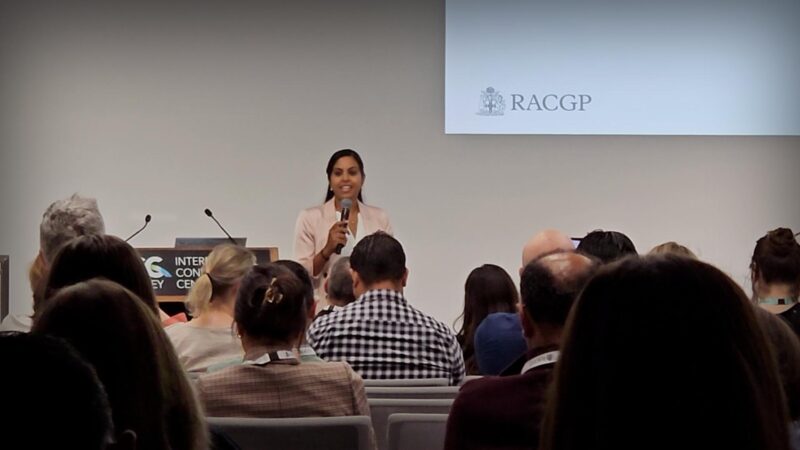
Fulfilling clinical, academic & research goals in General Practice
Dr Ramya Raman is a Specialist General Practitioner, medical educator, and health policy leader. Raised in Orange in Central West NSW, where she lived for over 15 years, she brings a deep, lived understanding of rural and community healthcare to her work.