
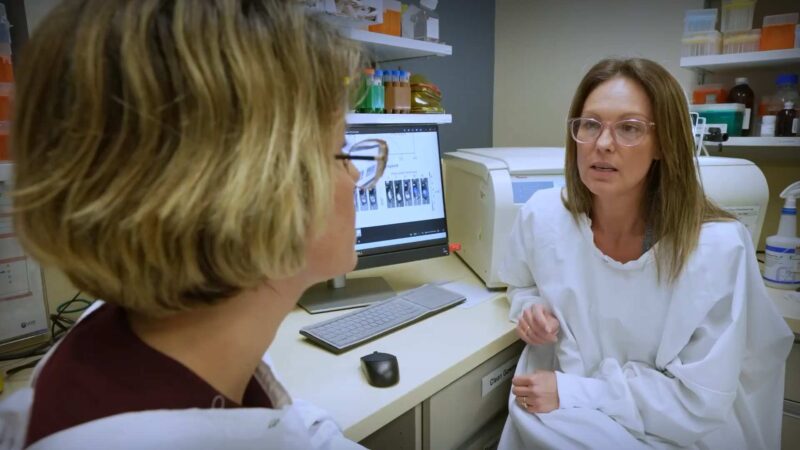
Research, Mentorship and the PhD Experience
Pancreatic cancer remains one of the deadliest cancers, with survival rates below 10 per cent and treatments often as harsh as the disease itself.
Finding better ways to treat one of the deadliest cancers has become the focus of a University of Wollongong research team, where the relationship between a PhD supervisor and candidate has also played an important role in shaping the next generation of researchers.
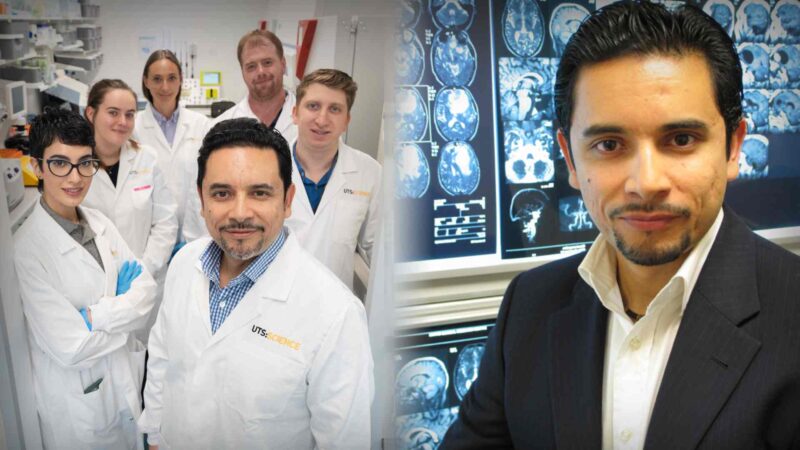
Using human skin hair follicles to treat Alzheimer’s disease
Professor Michael Valenzuela is a science opinion leader, innovator and creative thinker with a career-long commitment to the prevention and treatment of dementia.
Following that he completed graduate medicine and medical training at the Prince of Wales Hospital. In 2012, he established the Regenerative Neuroscience Group at the University of Sydney, and in 2017 became the university’s first Professor of Regenerative Medicine.
Professor Valenzuela’s group discovered a new cell type with potential for regenerative medicine, a rare neural precursor cell found deep within the human hair follicle. He is the main inventor on several related patents and is the Founder and Chief Scientific Officer of Skin2Neuron – a biotech company developing the first neurorestorative cell therapy for Alzheimer’s disease based on this work.

Cost of living relief for students training in national skills shortage fields
The Australian Government is expanding the Commonwealth Prac Payment to eligible students in 10 additional frontline allied health disciplines, providing financial support during mandatory university placements.
From 1 July 2027, eligible students studying audiology, pharmacy, radiography, clinical psychology, physiotherapy, rehabilitation therapies, occupational therapy, podiatry, speech pathology and paramedicine will be able to access the payment.

Confronting picture of growing women’s health crisis in uterine cancers
Uterine cancers have become Australia’s fastest-growing women’s cancer, with incidence doubling over the past 25 years and projected to continue to surge. Without immediate action, more than 44,000 women are expected to be diagnosed by 2035, and 8,900 will lose their lives to the disease.
Released November 2025, Australia’s first State of the Nation: Uterine Cancers in Australia 2025 report by the Australia New Zealand Gynaecological Oncology Group (ANZGOG), reveals a confronting picture of a growing women’s health crisis that has gone largely unseen and one that now requires immediate, coordinated national action.
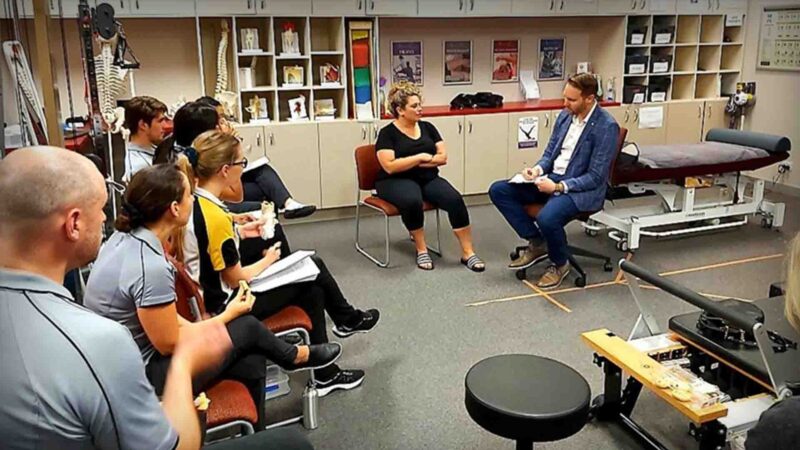
Specialist physiotherapist successfully mixes online & in-person
Dr. Kieran Richardson (FACP) is a Specialist Physiotherapist, conferred by the Australian College of Physiotherapists (Australian Physiotherapy Association) in 2016. Dr Richardson is the Director of Global Specialist Physiotherapy, a consultancy company providing online Formal Mentoring and Professional Development individual clinicians, clinics, and groups, as well as Second Opinions to clinicians and directly to patients all around the world.

Investments to address health inequities in Prostate Cancer Care
Income, education, geographical location, and discrimination based on ethnicity, race, gender and sexual orientation, are only a fraction of factors that can negatively affect a person’s quality of cancer care. This is defined as the “equity gap” and it’s costing people their lives.
Timed to coincide with World Cancer Day 4th February 2025, Movember announced prostate cancer investment of $5.5 million. Eighteen grants (16 proposals and 2 community development grants) are slated to directly tackle inequities in prostate cancer care. The funding will be over three years with the grants spread across five countries – six in Canada, five in the United Kingdom, three in Australia, three in the United States and one in Ireland – each having a specific focus population and care area.