

Empowered nurses leading digital health enablement
Nurses have a pivotal role to play in the widespread implementation and adoption of digital health technologies throughout the healthcare sector for the primary purpose of improving safety and quality of patient care.
Australian Health Journal talked to two of Australian top leaders in nursing and in digital health on how the role of nursing is pivotal to the success of digital health in the Australian health system.
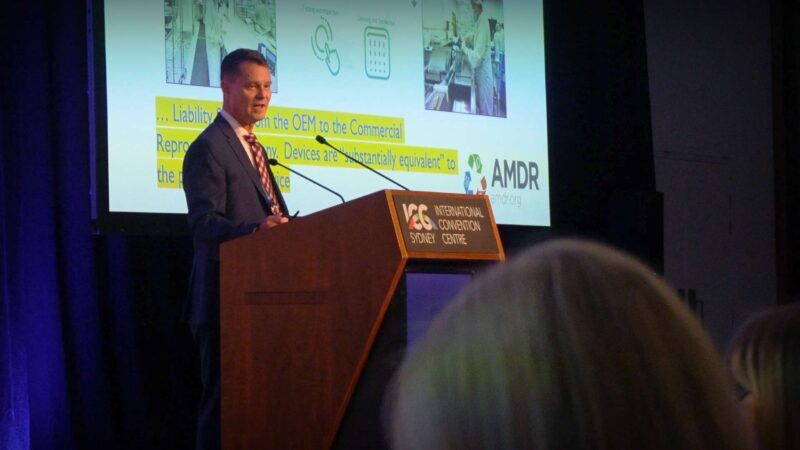
Circular use of medical device technology and evolving policy and regulatory frameworks
Healthcare sustainability is increasingly becoming a strategic priority, extending beyond environmental goals to influence procurement, regulation, costs and supply-chain resilience. Against this backdrop, medical device reprocessing is emerging as a potential pathway towards a more circular healthcare system.

Surgical Site Infection (SSI) Synopsis, including modifiable and non-modifiable risk factors
Talking to the Australian Health Journal, Professor Russo states there is a particular concern in joint operations, such as hip or knee replacements, as infections in these areas can have severe consequences, including the removal of the infected joint, prolonged treatment, and significant costs for both hospitals and patients. Despite the substantial impact of surgical site infections, Australia lacks a national surveillance program for these infections, making it challenging to obtain accurate data. However, an estimate suggests that around 45,000 surgical site infections occur annually in Australia, resulting in approximately 900 deaths.

Value-Based Health Care : Dental Health Services Victoria Case Study
Dental Health Services Victoria has implemented a value based health model for oral health, around the patient and the clinician that included both during co-design. This has been possible with a single oral health data system for the state of Victoria and staff keeping in mind the value and outcomes that patients seek.
Medical Technology Association of Australia

The Medical Technology Association of Australia (MTAA) is the national association representing companies in the medical technology industry. MTAA aims to ensure the benefits of modern, innovative and reliable medical technology are delivered effectively to provide better health outcomes to the Australian community.
MTAA represents manufacturers and suppliers of medical technology used in the diagnosis, prevention, treatment and management of disease and disability. The range of medical technology is diverse with products ranging from familiar items such as syringes and wound dressings, through to high-technology implanted devices such as pacemakers, defibrillators, hip and other orthopaedic implants. Products also include hospital and diagnostic imaging equipment such as ultrasounds and magnetic resonance imaging machines.
MTAA members distribute the majority of the non-pharmaceutical products used in the diagnosis and treatment of disease and disability in Australia. Our member companies also play a vital role in providing healthcare professionals with essential education and training to ensure safe and effective use of medical technology.
MEDIA PARTNER SINCE 2017

Victorian social prescribing program underway
n Part 2 of the Models of Care on Social Prescribing, Australian Health Journal spoke to 4 people involved in the Connect Local program under the Connecting Communities to Care 4 year program. The free program for over 65’s promotes wellbeing through social connection and is underway in the Glen Eira community in Melbourne.
– Deidre McGill, Executive General Manager, At Home Support, Bolton Clarke
– Ann Van Leerdam, Connect Local Community Connector, Bolton Clarke
– Dr Rajna Ogrin, Senior Research Fellow, Bolton Clarke Research Institute, Bolton Clarke
- Dr Daniel Fineberg, Deputy Director General Medicine, Alfred Hospital, Victoria