

Raising awareness, engagement and inclusion of Allied Health
Anita Hobson-Powell holds the position of Chief Allied Health Officer for the Australian Government within the Department of Health and Aged Care. With a background as an exercise physiologist and extensive experience leading allied health professional associations*, she has been entrusted with three main priorities. First, she aims to raise awareness about the significance of allied health professionals and their role in the healthcare system. This involves ensuring that decision makers and individuals engaging with health services understand the contributions of allied health professionals.

Connecting Students with Careers in MedTech
The MedTech Match Student Career Development Session in partnership with Engineers Australia ran alongside MTAA’s RegConnect Summit 2026, and gave student volunteers the opportunity to learn about the Australian MedTech landscape, discussing what the industry looks like, where entry points exist, and how the device lifecycle maps to careers.

Alarming move away from plants based foods and reduced variety in diets
Australian Dietary Guidelines recommend enjoying a wide variety of nutritious foods every day, including plenty of vegetables of different types and colours, and fruit.1 Yet recently released National Nutrition and Physical Activity Survey (NNPAS) data show fewer than one in four people (23.1 per cent) met the recommendation for fruit intake on a usual basis, and just 4.3 per cent met the recommendation for vegetables, legumes and beans.

Role of milk in cognitive function and quality of life in older adults
New research emphasises the role of cows’ milk, particularly A1 protein free milk, in enhancing cognitive function and quality of life for older adults with mild cognitive impairment (MCI). A multi-centre, double-blinded, randomised controlled clinical study published in *The Journal of Nutrition, Health and Aging* evaluated 88 milk-tolerant Chinese adults aged 65-75 over three months. Participants consumed either ordinary skim milk or A1 protein free skim milk, leading to improvements in various cognitive assessments.

Medicinal cannabis in Australia Update
According to the Australian Journal of General Practice, published by the Royal Australian College of General Practitioners, more than 130,000 medicinal cannabis approvals have been issued in Australia to date, mostly by general practitioners, with approximately 65% of these to treat chronic non-cancer pain. Despite robust supportive data from animal models, current clinical trial evidence for THC and CBD efficacy in chronic pain is incomplete. In their prescribing decisions, doctors must balance patient demand and curiosity with caution regarding potential risks and limited efficacy (Source: https://www1.racgp.org.au/ajgp/2021/october/medicinal-cannabis)
Australian Health Journal met with 3 speakers at the recent @arcsaustralia ARCS22 Conference providing an update on medicinal cannabis. The discussion with the speakers now centres on affordability and access.
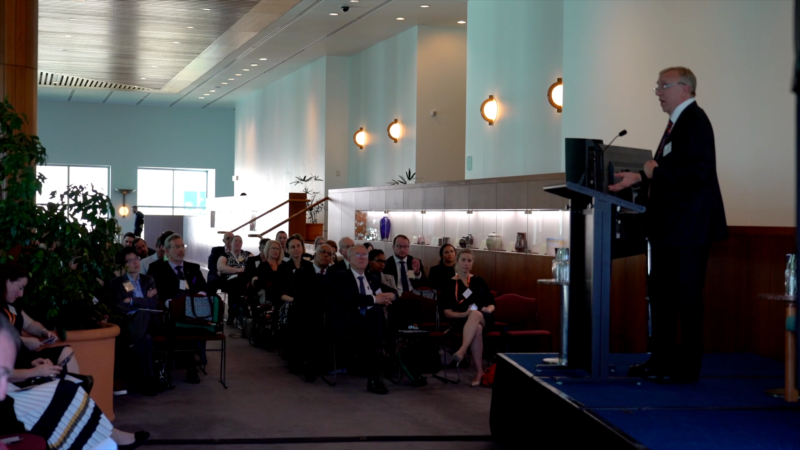
The 2019 John Deeble Lecture and Panel Discussion
The John Deeble Lecture and Panel Discussion was established by the Australian Healthcare and Hospitals Association to commemorate the life and achievements as distinguished scholar, health economist and health policy leader, Prof John Deeble AO.