

Targeted National Lung Cancer Screening Program commences in 2025
In February 2025, Australian Health Journal spoke with Mark Brooke, Chief Executive Officer of Lung Foundation Australia, at the 10th Australian Lung Cancer Conference in Adelaide, on the upcoming commencement of the National Lung Cancer Screening Program (NLCSP)

Ready to unleash the potential of the pharmacist health workforce
Last week, Associate Professor Fei Sim the National President of the Pharmaceutical Society of Australia (PSA), the peak body representing 39,000 pharmacists across Australia’s health system, spoke to Australian Health Journal about the release of the Unleashing the Potential of our Health Workforce – Scope of Practice Review. The review and final report sets out to create a clear pathway for health professionals to contribute more to our health system and practice to their full and top of scope.

ARCS Virtual Summit 2020 Report
ANDHealth CEO Bronwyn Le Grice steps us through key report data from 317 emerging high growth potential digital health companies across Australia. Each of these companies has been supported in some way by ANDHealth since 2017.

Awareness, diagnosis and treatment of Congenital Hypothyroidism
Australian Health Journal spoke to Associate Professor MIchelle Jack about congenital hypothyroidism and newborn screening and her concerns in the varying thresholds for across different states in Australia. Despite the existence of newborn screening programs since the 1970s, there is still controversy surrounding the appropriate screening levels. Congenital hypothyroidism, affecting about one in 3500 infants, can lead to severe intellectual and physical impairment if not diagnosed early. The condition is mainly caused by the thyroid gland’s failure to develop properly, resulting in insufficient thyroid hormone production.

Pharmacy led men’s urological health
Men’s urological needs refer to the medical and surgical conditions that affect the male urinary tract system and reproductive organs.
A urologist can address these concerns, however a pharmacy-led model of care developed by Brad Butt, called Mens Health Downunder has offered an alternative to certain urological needs of the male adult population over the past 10 years.
Australian Health Journal met with Brad to hear about his journey, Mens Health Downunder and the impact the pharmacy-led model of care has had on patient’s urological as well as mental health.
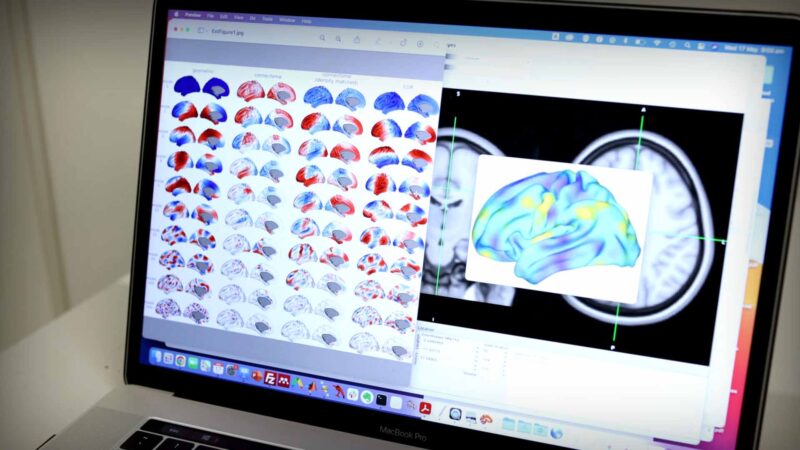
Landmark brain shape study
For over a century, researchers have thought that the patterns of brain activity that define our experiences, hopes and dreams are determined by how different brain regions communicate with each other through a complex web of trillions of cellular connections.
Now, a Monash University Turner Institute for Brain and Mental Health-led study has examined more than 10,000 different maps of human brain activity and found that the overall shape of a person’s brain exerts a far greater influence on how we think, feel and behave than its intricate neuronal connectivity.