

Strengthening Evidence Through Health Research Where Most People Access Healthcare
In February 2025, the Australian Government committed over $22 million for primary care research, including $5.2m awarded to Professor Michael Kidd, Director of the International Centre for Future Health Systems at UNSW and recently appointed Australia’s Chief Medical Officer, to lead the establishment of one of the largest research collaborations in Australia focused on improving primary care.
The Royal Australian College of GPs says a new national multidisciplinary consortium for primary care research is a positive step forward to improve patient care.

Investments to address health inequities in Prostate Cancer Care
Income, education, geographical location, and discrimination based on ethnicity, race, gender and sexual orientation, are only a fraction of factors that can negatively affect a person’s quality of cancer care. This is defined as the “equity gap” and it’s costing people their lives.
Timed to coincide with World Cancer Day 4th February 2025, Movember announced prostate cancer investment of $5.5 million. Eighteen grants (16 proposals and 2 community development grants) are slated to directly tackle inequities in prostate cancer care. The funding will be over three years with the grants spread across five countries – six in Canada, five in the United Kingdom, three in Australia, three in the United States and one in Ireland – each having a specific focus population and care area.

Diary of a Paramedic in a primary health care clinic
Alecka Miles is a lecturer at Edith Cowan University and works as a paramedic in a multidisciplinary team at Dianella Family Medical Centre in Metropolitan Perth, Western Australia.
Community paramedic roles have a history in Australia, dating back to 2007 in New South Wales and followed by similar initiatives in South Australia and New Zealand. Alecka’s position emerged after she sought to evaluate how paramedics could integrate into general practice, ultimately leading to a job offer post-COVID lockdown in 2020. Her skills, particularly in cannulation, proved valuable as healthcare shifted towards primary care.
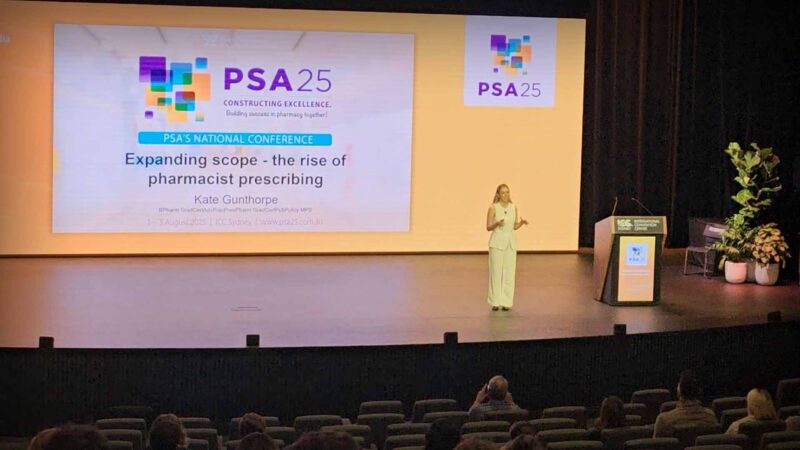
Pharmacist Prescribing Model gets further support from state health
A full scope pharmacist prescriber model allows pharmacists to independently prescribe medicines within their professional competence, without requiring prior doctor authorisation. It extends pharmacists’ role beyond dispensing to include assessment, diagnosis of minor and chronic conditions, initiation and modification of therapy, and ongoing patient monitoring. This model integrates pharmacists into primary care teams, aiming to improve timely access to treatment, reduce pressure on general practitioners, and enhance continuity of care. Pharmacists use their clinical knowledge, patient records, and collaborative pathways to ensure safe prescribing. The model emphasises training, regulation, and accountability to maintain high standards of patient safety.
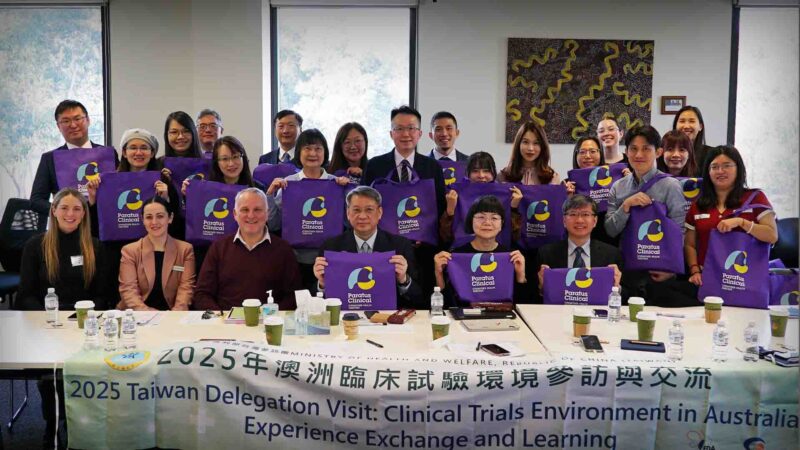
Taiwanese health and research delegation visit Paratus clinical trial site in Canberra
In late August 2025, a Taiwanese delegation comprising government officials from the Taiwanese FDA, various governmental groups, and physicians and researchers from across Taiwan, visited Paratus Clinical’s trial site in Canberra. Their objective was to explore both the differences and similarities between the clinical research ecosystems of Taiwan and Australia.

Reporting on Australian childhood visual impairment: the first 10 years
The Australian Childhood Vision Impairment Register (ACVIR), the first of its kind in Australia, captures uniquely Australian data which is used to improve services for children with vision impairment. The data is also available to researchers who work in the area of eye disease and disorders of vision.