
Episode 3 Season 1
Australian Health Journal returns with Episode 3. In this episode we report on devices shown at the 2018 CeBIT show, Early Career Cancer Researcher and Parkinson’s Disease.

Intervention in hearing loss for patients
In her role as an audiologist and trainer, Lauren McNee emphasises the urgency of addressing sudden hearing loss, highlighting the time-sensitive nature of available treatment options. She advises healthcare professionals, including GPs, pharmacists, primary care nurses and specialists, to remain vigilant for subtle signs of hearing loss in their patients. Such signs may include difficulty following prescription guidelines, miscommunication during conversations, or non-verbal cues like a tilt of the head or asking for repetitions.

Ensuring stringent quality standards in the lifecycle of medical devices
Dr Jasjit Baveja is the Associate Director of Policy at the Medical Technology Association of Australia (MTAA), where she oversees regulatory affairs, clinical code of practice, procurement, industry policy, reimbursement, and advocacy. With over 20 years of experience in the medical device regulatory space, Dr Bavej’s expertise lies in providing educational opportunities for regulatory professionals in Australia to ensure continuous learning and professional development. She collaborates closely with the Therapeutic Goods Administration (TGA) to run workshops that provide invaluable experience, networking opportunities, and skill enhancement.

ARCS Virtual Summit 2020 Report
ANDHealth CEO Bronwyn Le Grice steps us through key report data from 317 emerging high growth potential digital health companies across Australia. Each of these companies has been supported in some way by ANDHealth since 2017.

Spinal implant technology eyes global opportunity
Adelaide, South Australia wants to let the secret out, and be known as hub for medical devices, pharmaceuticals, biotechnology, and digital health. It boasts world-class research institutions, such as the University of Adelaide and SAHMRI, fostering innovation and collaboration. The city’s supportive government policies provide incentives, grants, and streamlined regulations for businesses. Adelaide’s skilled workforce, renowned for its expertise in health sciences, offers a talent pool to drive industry growth. Additionally, the city’s strategic location, advanced infrastructure, and strong healthcare ecosystem make it an ideal base for development, manufacturing, and market access, attracting companies in these sectors.
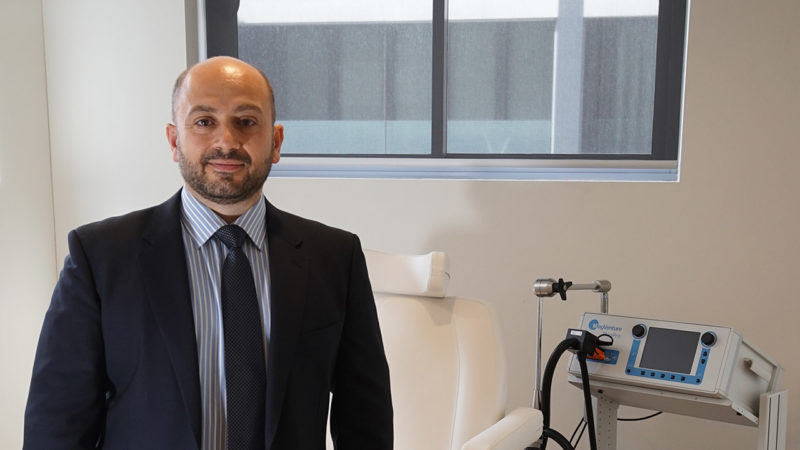
AHJ S1E1: Sydney TMS: Transcranial Magnetic Stimulation
TMS (Transcranial Magnetic Stimulation) is a mild form of brain stimulation. Magnetic fields, generated by a coil placed on the head, are used to stimulate a small area of the brain. It is a non-invasive procedure that treats the symptoms of depression through the use of magnetic fields that stimulate nerve cells. The stimulation takes 20-30 minutes and given on an outpatient basis. While receiving stimulation, the patient is fully awake.
It can be use to treat patients who have little success with common treatments e.g., medication, psycho-therapy.
Sydney TMS operates 3 clinics in Australia that provide TMS treatment to patients. Founder Dr Jason Pace spoke with Australian Health Journal