
-
Inaugural Rural and Remote Health Awards
Rural communities are a foundation of the economy and society and must be kept healthy.
There are significant personal, professional and financial rewards for rural healthcare professionals. However, there are also challenges – isolation, long hours, confusion about where to turn for support.
To acknowledge and celebrate the work of Rural and Remote Health Professionals, Rural Health Pro have launched the inaugural National Rural and Remote Health Awards.
-
Recognising service in health regulation
In April 2023, Professor John Skerritt retired from his position of Deputy Secretary Health Products Regulation Group, a role he has been in since 2012. During his time at the TGA he had line responsibility for over 1200 staff involved in the regulation of therapeutic goods, regulation of gene technology and industrial chemicals and control of drug import, export and production.
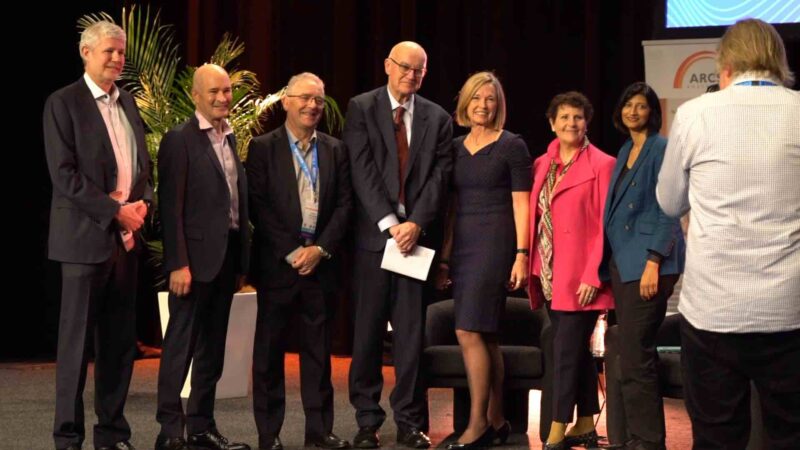
At this year’s ARCS 2023 Conference, ARCS Australia CEO Dr Shanny Dyer paid tribute to Professor Skerritt and his service to the Australian health industry. She led a tribute with fellow industry heads, Elizabeth de Somer, CEO, Medicines Australia, Anne Harris, Managing Director, Pfizer Australia & New Zealand, Deon Schoombie, CEO, Consumer Healthcare Products Australia, Ian Burgess, CEO, Medical Technology Association of Australia and Arthur Brandwood, President ARCS Australia.
-
World first in rural and remote nursing
In March 2023, the Australian Government released the National Rural and Remote Nursing Generalist Framework 2023–2027. The Framework is a world first and describes the unique context of practice and core capabilities for rural and remote Registered Nurses in Australia.
The Framework was developed by the Office of the National Rural Health Commissioner and Australian Health Journal spoke with National Rural Health Commissioner, Adjunct Professor Ruth Stewart, and Deputy National Rural Health Commissioner – Nursing and Midwifery, Adjunct Professor Shelley Nowlan, on the importance of rural and remote nursing and of the Framework itself.
Post Views:
905
Getting the conversation going on the connection between oral health and chronic conditions


Categories
- Allied Health 14
- Associations 54
- ARCS Australia 6
- Australasian College of Paramedicine 2
- Australian College of Nursing 13
- Australian Healthcare and Hospitals Association 9
- Australian Primary Health Care Nurses Association 3
- Consumers Health Forum of Australia 3
- Medical Technology Association of Australia 8
- Medicines Australia 2
- Pharmacy Society of Australia 5
- Royal Australian College for General Practitioners 3
- Australian state 29
- Awareness 3
- Bowel and Intestine 1
- Brain and Mind 26
- Cancer 7
- Career 37
- Charities 1
- Chronic disease 2
- Clinical Trials 26
- Conferences 13
- Core muscles 1
- Dental 12
- Ear, nose and throat ENT 2
- Education 11
- Endocrinology 6
- Episodes 6
- Eye Health 3
- Gastroenterology 1
- General Practice 10
- Global Health 1
- Government 26
- Haematology 2
- Health System 92
- Accessibility 2
- Allied Health 3
- Awards and Recognition 4
- Comprehensive Centre 1
- Consumer involvement 3
- Decision Support 1
- Government 6
- Health Policy 4
- Industry 1
- Job Skills and Training 6
- New Models of Care 14
- Occupational Therapy 5
- Population screening 1
- Preventive Health 3
- Private Health 1
- Public Health 6
- Regulatory and Reimbursement 5
- Scope of Practice 5
- Social Prescribing 1
- Value-Based Health Care 4
- Workforce growth 9
- Workforce Survey 1
- Workforce wellbeing 6
- Heart 5
- Hospitals and Clinics 54
- Anaesthesia 2
- Co-design and adoption 6
- Construction 2
- COVID-19 3
- Emergency Department 7
- Environment / Sustainability 1
- Equipment 2
- Funding and Operating Models 3
- Health Services and Systems 3
- Infection Control 4
- Planning, Culture and Growth 2
- Point of Care 4
- Private Hospitals 1
- Surgery 5
- Workflow 1
- Wound Management 2
- Immunology 1
- Industry 1
- Innovation 8
- International health and research systems 1
- Lung 3
- Media Partners 3
- Medical Devices 15
- Medical Imaging 6
- Medical Management 1
- Medical Research 20
- Medicine 9
- Microbiota 1
- Musculoskeletal 5
- New Content 270
- Nursing 36
- Nutrition 2
- Oncology 5
- Oral Health 3
- Paramedics 5
- Patients 16
- Pharmacy 12
- Philanthropy, Foundations and Charity 1
- Population 61
- Aboriginal 3
- Cosmetic surgery 1
- Defence 2
- Disability 2
- Diversity, inclusion and equity 1
- Frail, Homebound and Bedridden Population 4
- Homeless 1
- Marginalised 1
- Men's Health 1
- Middle-aged 1
- New Parents 1
- Paediatric 11
- Palliative 2
- Rural and Remote 8
- Seniors and Aged Care 10
- Women and child birth 4
- Women's Health 5
- Youth 2
- Primary Health 14
- Region 1
- Research 31
- Startups 3
- Technology 39
- Training and Career 26
- Workforce sustainability 1