
-
Artificial Intelligence (AI) & data skilling clinicians
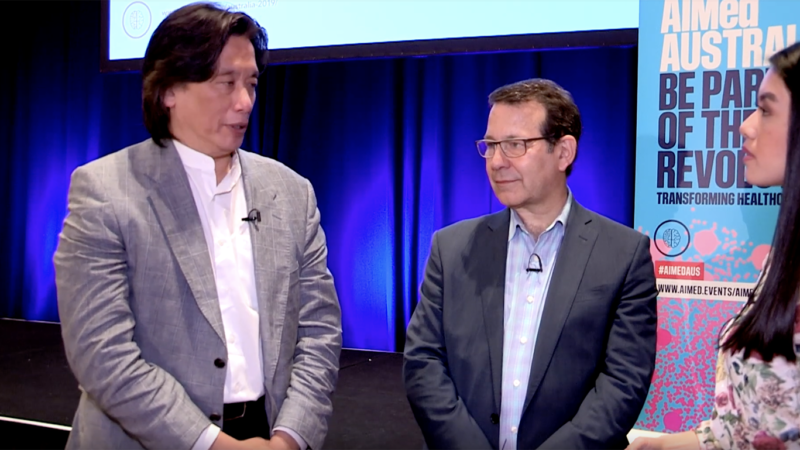
In this first release, world renowned AI and medical data science experts Dr Anthony Chang and Professor Enrico Coiera spoke to Australian Health Journal reporter Anne Dao at AIMed 2019 Sydney. The conference aimed at clinicians and non-clinicians discussed current clinical applications of Artificial Intelligence in medical imaging, decision support, use of predictive healthcare and machine learning.
-
AHJ S1E4: TAVI 10 Year Anniversary
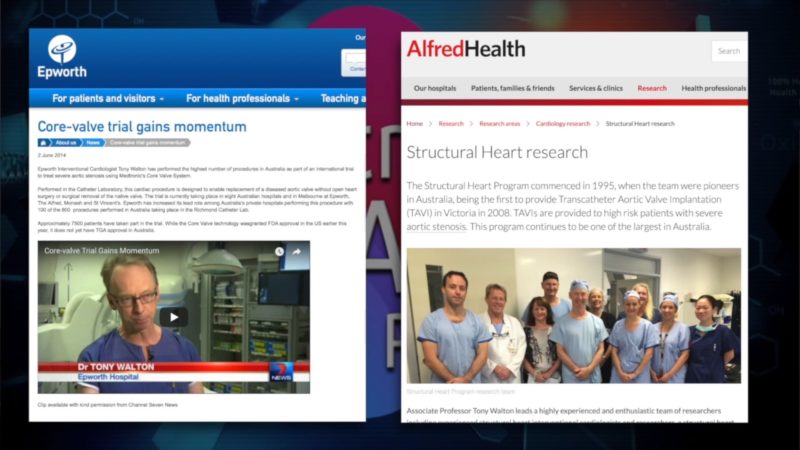
2018 marks the 10 year anniversary of the TAVI device, short for the Transcatheter Aortic Valve Implantation. The TAVI system enables the replacement of a diseased aortic valve without open-heart surgery or surgical removal of the native valve.
This minimally invasive surgical option reduces operating time and allows for a shortened recovery period for patients.
AHJ met with the cardiologist teams in Melbourne’s Epworth and Alfred Hospital who have involved in implanting the device over the past 10 years.
Interviews:
- Associate Professor Tony Walton, Epworth Hospital, Director of Catheter Laboratory and Deputy Director of Cardiology – Alfred Health
- Associate Professor Ron Dick, Director of Cardiac Sciences – Epworth Healthcare
- Professor Stephen Duffy, Alfred Health
-
CASE STUDY: Creating awareness, workforce education & dissemination strategy in national screening
At the recent Screening Conference 2025 in Sydney, hosted by Public Health Association, Dr Rachael Dodd, Senior Research Fellow at The Daffodil Centre, spoke about the information and educational resources created to increase awareness in the healthcare workforce and community on the upcoming Australia’s National Lung Cancer Screening Program commencing in July 2025.
Post Views:
1,167
Surgeon-scientist path laid for medical device research

Categories
- Allied Health 21
- Associations 57
- ARCS Australia 6
- Australasian College of Paramedicine 2
- Australian College of Nursing 13
- Australian Healthcare and Hospitals Association 9
- Australian Primary Health Care Nurses Association 3
- Consumers Health Forum of Australia 3
- Medical Technology Association of Australia 11
- Medicines Australia 2
- Pharmacy Society of Australia 5
- Royal Australian College for General Practitioners 3
- Australian state 35
- Awareness 3
- Bowel and Intestine 3
- Brain and Mind 30
- Cancer 9
- Career 55
- Charities 1
- Chronic disease 3
- Clinical Trials 31
- Conferences 14
- Core muscles 2
- Dental 14
- Dermatology 1
- Ear, nose and throat ENT 2
- Education 19
- Endocrinology 7
- Episodes 6
- Eye Health 5
- FULL CIRCLE DIGITAL HEALTH 1
- Gastroenterology 2
- General Practice 13
- Global Health 1
- Government 30
- Haematology 2
- Health System 114
- Accessibility 5
- Allied Health 3
- Awards and Recognition 6
- Comprehensive Centre 1
- Consumer involvement 3
- Decision Support 1
- Disease Preparedness 1
- Funding 1
- Government 18
- Health Policy 9
- Industry 2
- Job Skills and Training 6
- New Models of Care 14
- Occupational Therapy 5
- Population screening 2
- Preventive Health 4
- Private Health 1
- Public Health 6
- Regulatory and Reimbursement 6
- Scope of Practice 5
- Social Prescribing 1
- Value-Based Health Care 4
- Workforce growth 12
- Workforce Survey 1
- Workforce wellbeing 6
- Heart 7
- Hospitals and Clinics 63
- Anaesthesia 3
- Co-design and adoption 6
- Construction 2
- COVID-19 3
- Emergency Department 7
- Environment / Sustainability 3
- Equipment 2
- Funding and Operating Models 7
- Health Services and Systems 4
- Infection Control 4
- Planning, Culture and Growth 2
- Point of Care 4
- Private Hospitals 1
- Surgery 6
- Workflow 1
- Wound Management 2
- Immunology 2
- Industry 1
- Infectious disease 1
- Innovation 11
- International health and research systems 1
- Lived Experience 2
- Lung 4
- Markets 1
- Media Partners 3
- Medical Devices 19
- Medical Imaging 7
- Medical Management 1
- Medical Research 27
- Medical Technology 6
- Medicine 12
- Microbiota 1
- Musculoskeletal 6
- New Content 331
- Nursing 36
- Nutrition 3
- Oncology 6
- Op-Ed 3
- Oral Health 4
- Paramedics 5
- Patients 17
- Pharmacy 13
- Philanthropy, Foundations and Charity 2
- Population 80
- Aboriginal 3
- Cosmetic surgery 1
- Defence 2
- Disability 3
- Diversity, inclusion and equity 3
- Frail, Homebound and Bedridden Population 4
- Homeless 1
- Marginalised 1
- Men's Health 1
- Middle-aged 2
- New Parents 1
- Newborn / Neonatal 1
- Paediatric 13
- Palliative 2
- Rural and Remote 8
- Seniors and Aged Care 10
- Veterans 1
- Women and child birth 7
- Women's Health 14
- Youth 2
- Primary Health 16
- Region 1
- Reproduction, pregnancy & child birth 1
- Research 40
- Research to Practice 1
- Space Health & Medicine 2
- Startups 3
- Technology 46
- Training and Career 33
- Workforce sustainability 1