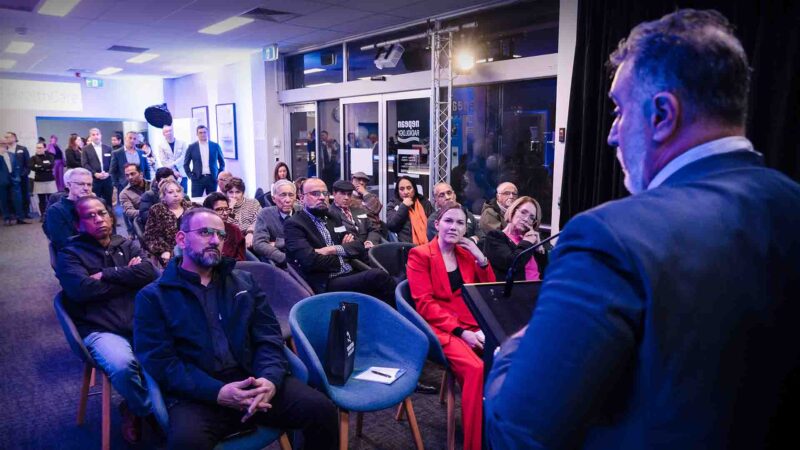
How does a nurse navigate senior management to affect change within their organisation? It’s a gap that Australian College of Nursing is helping to fill with it’s Mid-Career Nurse Leadership Program that gives established nursing professional access to prominent leaders in nursing.
Launched in June 2019 and devised by Tania Dufty, Director of Strategy, the group of 22 nurses from acute, aged and primary health care have also been able to receive one-on-one coaching to help them complete a project for their workplace. Also within the cohort, the opportunity to network with peers has them given much broader insights into other areas outside of their own work.
-
Rapid trend shift in radiology technology and accessibility
Dr Mansoor Parker obtained his medical degree from the University of Tasmania. He then completed his specialist radiology training at Nepean Hospital, Sydney with subspecialty interests in Interventional Radiology and Pain Management, Musculoskeletal, Cardiac and Abdominal Imaging. Dr Parker is a qualified specialist since 2005 and is a member of the Royal Australian and New Zealand College of Radiologists and the exclusive Australasian Musculoskeletal Imaging Group (AMSIG) as well as the Interventional Radiology Society of Australasia (IRSA).
-
30 years on, Viertel Foundation legacy continues
One of Australia’s largest charitable foundations, the Sylvia and Charles Viertel Charitable Foundation, is celebrating three decades of transforming Australian healthcare – with more than $90 million invested in medical research and a legacy of breakthroughs that are saving lives. Viertel Fellowships support some of Australia’s best and brightest researchers and clinicians, with 70 Fellowships awarded to date.
-
FULL FEATURE Consumers and communities as agents of health care change and improvement
Policymakers, health administrators and clinicians must learn and embrace new ways to harness the transformative role consumers, community members and carers can play. Conversely, consumers and communities need support, capability and capacity to engage as equals in policy, research, program and service design. This is necessary if are to be less technocratic and realise the vision where all members of society can live the best life possible.